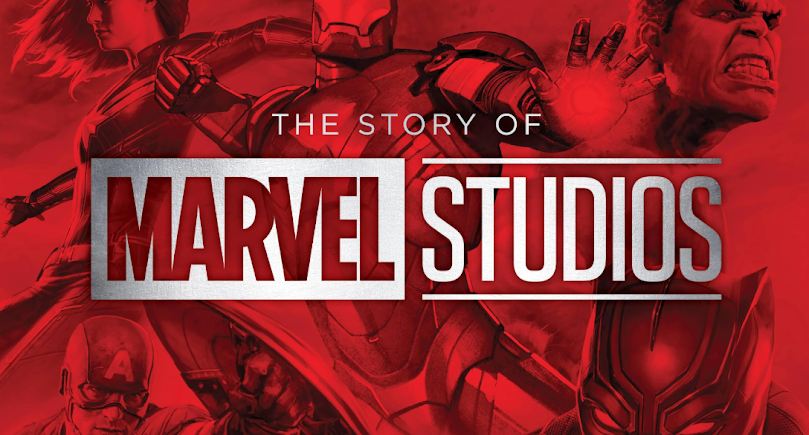
The Journey of Marvel Studios: Our Point of View
There's a particular kind of magic that gets lost when something becomes too big to fail. That's the thought that keeps circling back whenever we sit down to talk about Marvel Studios, because what started as a scrappy underdog bet has turned into one of the most scrutinized, debated, and occasionally exhausting franchises in entertainment history. And honestly, that journey deserves more nuance than the usual "Marvel is dying" or "Marvel can do no wrong" takes that dominate social media.
So let's actually talk about it.
The Underdog Years Nobody Talks About Enough
Back when the first Iron Man film came out, Marvel wasn't the powerhouse we think of today. It was a studio betting its future on a mid-tier character and an actor whose career had seen better days. Nobody was guaranteeing success. There was no ten-year plan being whispered about in trade magazines, no shared universe playbook to follow, because frankly, nobody had done it before at that scale.
What made those early years special wasn't perfect execution. Some of those films had rough edges, thin villains, and pacing issues that fans still bring up today. What made them special was the sense that everyone involved was genuinely building something from scratch, figuring it out film by film, and inviting the audience along for that ride. There was risk in the air, and risk tends to produce more interesting art than certainty ever does.
Then Came the Golden Stretch
For a solid run of years, it felt like Marvel couldn't miss. Every film had its own identity, even while contributing to a bigger picture. A war movie could sit next to a heist comedy, a space opera could sit next to a grounded political thriller, and somehow it all connected without feeling forced. That balance is genuinely hard to pull off, and it's easy to forget how much precision was required to keep dozens of moving pieces feeling cohesive rather than chaotic.
This is the era most fans point to when they say "Marvel used to be better." And honestly, there's truth in that nostalgia. But it's worth remembering that this golden stretch was also the product of years of quieter groundwork, mistakes made early, and lessons learned the hard way. Nothing about that consistency was accidental.
The Stumble, and Why It Actually Makes Sense
Every long-running story eventually hits a rough patch, and Marvel's post-Endgame chapter has been exactly that. Suddenly, the framework that worked so well for over a decade needed to answer a much harder question: what happens after you've already told the biggest story imaginable?
That's not a small problem to solve. When your entire narrative structure builds toward one massive payoff, everything that comes after is going to feel like it's chasing a shadow. Add in the sheer volume of content flooding out across theaters and streaming at the same time, and it's no surprise audiences started feeling fatigued. Quantity has a way of quietly eroding anticipation, even when the quality hasn't necessarily dropped as much as people assume.
We'd argue the criticism Marvel faced during this stretch wasn't entirely fair, but it wasn't unfounded either. Some projects clearly needed more time in development. Some storylines were introduced without a clear plan for where they were headed. That's the cost of moving fast for over a decade without pausing to recalibrate.
Reinvention Is Harder Than Creation
Here's the part we find genuinely fascinating: building something from nothing is impressive, but reinventing something that already has a decade of expectations attached to it is a completely different challenge. Marvel is currently in that exact position. It has to honor everything that came before while proving it still has new stories worth telling.
What's encouraging is that the studio seems aware of this. The tighter focus on fewer, more deliberate releases. The willingness to bring in directors known for distinct visual and tonal identities rather than interchangeable studio hands. The push toward darker, more emotionally complex storytelling instead of leaning purely on spectacle. These are the signs of a studio that's actually listening, even if the results won't please everyone.
Why We Still Believe in the Bigger Picture
It's easy to be cynical about a franchise this large. Cynicism is often the safest opinion to hold, because it protects you from disappointment. But we'd rather approach Marvel's journey with cautious optimism, because the ambition behind what they're attempting hasn't disappeared. If anything, the challenges of the last few years have forced a kind of course correction that could genuinely pay off.
The truth is, no franchise stays golden forever, and no franchise that matters stays universally loved. Marvel's journey has never really been a straight line upward. It's been a cycle of risk, payoff, comfort, stumble, and reinvention, over and over again. That's not a flaw in the story. That's just what long-term storytelling actually looks like when it's happening in real time, in front of an audience that's allowed to have opinions every step of the way.
Where Marvel goes from here is still an open question, and that's exactly what makes this next chapter worth paying attention to. Not because it's guaranteed to be great, but because it's genuinely uncertain, and uncertainty is where the interesting stories usually live.
If you want to keep following our take on where the MCU is headed next, we regularly break down what's happening across Marvel's upcoming slate, and we'll keep sharing our honest perspective as this next chapter unfolds.
No comments yet. Be the first to share your thoughts!