How Did Old Captain America Return To The Main MCU Timeline?


Marvel's Avengers: Endgame left one last Captain America mystery unsolved: How did old Steve Rogers return to the original Marvel Cinematic Universe timeline? The Avengers: Endgame ending saw Steve Rogers use Pym particles to venture through the Quantum realm and travel through time in order to return all the Infinity Stones to their original place in the timeline. Then, instead of returning to the present, he chose to stay in the past and spend his life with Peggy Carter.

The final shot of Avengers: Endgame is Steve finally getting his dance with Peggy that he promised her all the way back in Captain America: The First Avenger. It's meant to symbolize Steve finally being done sacrificing for the greater good and acting selfishly just for once—the inverse of Tony Stark's ending as Iron Man, which saw the selfish genius billionaire playboy sacrifice his life to defeat Thanos. However, the film's ending leaves one mystery unsolved, in that it never explains how Steve returned to the present MCU timeline.

Endgame's Ending Doesn't Answer How Old Captain America Returns


Instead of returning on the platform the Avengers use for time traveling, old Captain America appears a few moments later sitting on a bench by the nearby lake. However, it's never revealed how Steve made his way to the bench. He doesn't return to the time travel platform, which is the only one of its kind in existence, since it was rebuilt after Thanos destroyed the Avengers' compound in his attack.

The conversation between Steve Rogers and Sam Wilson when old Captain America does return is focused mostly on the shield and the superhero mantle. Though Steve does mention his decision to get a life, he doesn't reveal how exactly he made that happen or how he returned to the present. Then, the conversation quickly shifts to Steve passing on the Captain America shield to Sam, before the movie cuts to Steve's dance with Peggy.

The Russos Explained Steve Rogers' Reappearance In Endgame


In terms of knowing how old Captain America may have returned from the past, it's important to understand exactly where he was and, unfortunately, those involved in telling Steve Rogers' story don't all agree. Avengers: Endgame directors Joe and Anthony Russo have said they believe Steve created a branch timeline when he stayed in the past. If that's true, it means that if Steve had wanted to travel back to the main MCU timeline, he'd have to travel between timelines, not just backward or forward in the main timeline. But it's unclear if the Pym suits and particles were capable of traveling from a branched timeline to the main timeline.

Another wrinkle in that explanation is the MCU Phase 4's introduction of the Time Variance Authority. If Steve had created a branched timeline, surely the TVA would have intervened and either gotten rid of him or put him back in his original time. So, if Steve was living in a branched timeline, Marvel needs to explain how he would've traveled from that timeline to the prime MCU timeline, and why that branched timeline was allowed to exist.

However, the Russos' idea of what happened to Steve is different to what the writers, Christopher Markus and Stephen McFeely, think. They claim that Steve stayed in the main MCU timeline and staying in the past didn't create any branched timelines because he was always meant to be there. This explanation solves the problem of the branched reality and does offer a possible way old Captain America appeared at the end of Avengers: Endgame.

Endgame's Ending Still Has A Major Unanswered Mystery


If the Russos are right and Steve created a branched timeline wherein he lived out his life with Peggy separate from the main MCU timeline, he'd need a way to get back. Since it's a different timeline, one that doesn't have Captain America as part of the Avengers, it stands to reason they may never have developed the tech he'd need to get home. Or, if they did, it could have been different in a way that made it impossible for him to return. But, if Steve could still use the suit and Pym particles he used to put the Infinity Stones back, it's unclear how he could've returned without the platform since there may not be one in the branched timeline and there was only one in the prime timeline.

It makes much more sense for the Russos to be wrong about Steve creating a branched reality and instead staying in the MCU timeline. That way, he could simply wait, without needing to time travel or travel between timelines. Of course, then he'd need to sneak over to the bench while Sam, Bucky and the Hulk's backs were turned, but that seems more doable than the other options.

Still, this is all speculation based on what's in the movie and the creatives' conflicting statements about what they think happened to Steve. The MCU has yet to explain in canon how old Captain America returned to the main MCU timeline to give the shield to Sam. Whether it happens in Captain America: Brave New World, Thunderbolts, Avengers: The Kang Dynasty or Avengers: Secret Wars, Marvel needs to solve this one last Avengers: Endgame mystery and clear up all the confusion surrounding how old Captain America returns.
Read More Comments

Endgame's Final Battle Was Missing 1 Big Thing (& How To Fix It)


While the final battle in Avengers: Endgame featured nearly every hero assembling against Thanos and his forces, one big thing was missing that would have made the conclusion of the Infinity Saga truly perfect. Despite having a major role in bringing Earth's Mightiest Heroes together in the first Avengers film and his subsequent roles in the MCU going forward, former SHIELD director Nick Fury was noticeably absent in the war against Thanos. While Endgame's writers gave logical reasons as to why Samuel L. Jackson's character was left out, there's still a way the master spy could have been a major player against the Mad Titan.

As seen in the post-credits scene for Avengers: Infinity War, Fury, and his second-in-command Maria Hill were both dusted when Thanos snapped his fingers, being part of the half of all life that was erased in what would come to be known as the Decimation. As such, neither would be seen until after the Avengers retrieved the Infinity Stones from the past to bring back those they had lost. While this resulted in many of the erased Avengers returning just in time to take on Thanos and his armies, Fury and Hill were not present. According to co-screenwriter Christopher Markus, it was determined that Nick Fury wasn't in Endgame's final battle because he "would just be firing a gun" amid multiple heroes wielding all kinds of incredible powers. However, it should be evident that Fury could have brought something huge to the table.

As seen in the original Avengers, Nick Fury offered Earth's Mightiest Heroes plenty of air support via the impressive SHIELD helicarrier. Despite SHIELD's end seen in Captain America: Winter Soldier, Fury kept the helicarrier in reserve to be similarly used in Avengers: Age of Ultron. Bringing in the impressive aircraft to Endgame's final battle would have been poetic, continuing an Avengers trend while having Fury provide some epic firepower to the heroes he helped assemble (going way beyond a simple pistol).


How Endgame Could Have Used Fury & The SHIELD Helicarrier


The helicarrier could have easily justified Fury's presence in the final battle against Thanos, especially seeing how the Mad Titan has his own ship overhead known as the Sanctuary II. However, the helicarrier could have done even more. While Endgame saw Carol Danvers' Captain Marvel arriving to destroy Thanos' warship during the final battle, Fury and the helicarrier could have been right behind her. Seeing as Danvers was largely still a newcomer to heroes and fans alike at this point in the MCU, Fury could have shared her debut, giving her a smoother introduction as someone she actually knew. Working in tandem, they could have taken out the Sanctuary II before offering support to the Avengers below.


The final battle of Avengers: Endgame is rightly seen as the all-encompassing culminating conflict to conclude the MCU's Infinity Saga. However, Nick Fury's absence is what keeps the battle from total perfection, the difference between an "A" and an "A+." To that end, using the SHIELD helicarrier seems like it would have been the perfect way for Nick Fury to enter the fray, rather than the former SHIELD director only showing up in the aftermath for Iron Man's funeral.

Read More Comments

Ms. Marvel Producer Reveals MCU Timeline Estimate, Years After Avengers: Endgame (Exclusive)


Following the conclusion of Avengers: Endgame and the Infinity Saga, the MCU roster has expanded significantly with new heroes ranging from Shang-Chi to America Chavez to Kate Bishop. Now, come June 8, the Marvel Cinematic Universe is about to gain another in Ms. Marvel on Disney+. 


Starring Iman Vellani as Kamala Khan, Ms. Marvel is a grounded, teen series that explores how an Avengers fan copes with becoming a hero herself while still dealing with family, friends, and high school. 


While this coming-of-age tale has various relatable themes, MCU fans will also find common ground with Kamala in that she's an Avengers super fan and extremely knowledgeable about the events of Avengers: Endgame.


Given that fact, the question, is where in the post-Endgame timeline does Ms. Marvel take place? Now, just ahead of the series debut, Marvel Studios has offered an answer. 


Related
Ms. Marvel Director Reveals Spider-Man: Into the Spider-Verse Connection


When Is Ms. Marvel Set on the MCU Timeline? 


Due to Kamala's affinity for Captain Marvel and her attendance at AvengerCon - held at Captain America's Camp Lehigh - it's hard to know just how removed her origin story is from Tony Stark's snap.


In an exclusive interview with The Direct, Ms. Marvel writer and producer Sana Amanat addressed where Kamala's origin tale falls on the timeline of the MCU, claiming it takes place roughly "one to two years" after Avengers: Endgame:


"So, I think right now, we haven't put an official number on how many years have gone by since Endgame. I cannot tell you off the top of my head because I would butcher it. I feel like it's one to two years [after Avengers: Endgame], something like that, but I don't actually remember [specifically]. But we do have that in our timeline."


Considering that the majority of Avengers: Endgame takes place in the year 2023 canonically in the MCU, this estimate sets Ms. Marvel in either 2024 or 2025.


When Exactly Does Ms. Marvel Take Place?


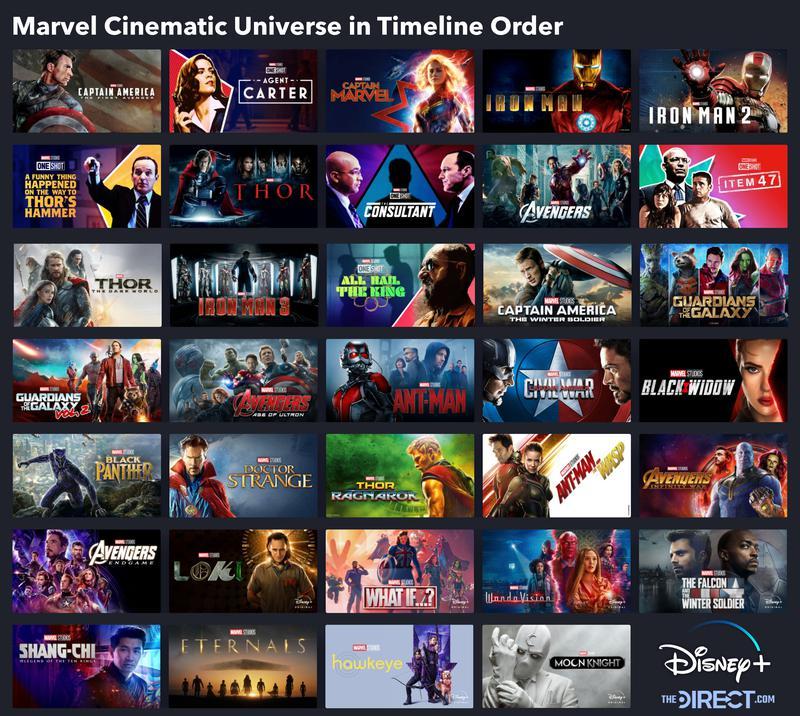
Currently, the most recent event within Disney+'s Marvel Cinematic Universe Timeline Order is Moon Knight, which is proceeded only by Hawkeye. 


Now, since Hawkeye occurs about a year after Endgame, it's possible that Moon Knight takes place sometime after December 2024 and into 2025. However, since that show had so few connections to the greater MCU, it's hard to know if it will maintain that position when Ms. Marvel drops on June 8. 


Right now, Phase 4 of the MCU is ordered as follows:


1. Loki

2. What If...?

3.WandaVision

4.The Falcon and the Winter Soldier

5.Shang-Chi and the Legend of the Ten Rings

6.Eternals

7.Hawkeye

8.Moon Knight

The only exceptions from this list are Spider-Man: No Way Home, as it's currently not available to stream on Disney+, and Doctor Strange in the Multiverse of Madness. Just where and when the latter falls on this timeline will be determined on June 22, when it drops on Disney+. 


Even though Samanat wasn't able to provide a definite answer to when Kamala Khan's origin story occurs within Phase 4, fans now have more of an idea that the series takes place at least one year after the Battle of Earth. And, when the show debuts on June 8, Ms. Marvel will offer a whole new perspective of post-Endgame life within the MCU. 


Ms. Marvel premieres on June 8 on Disney+.


Read More Comments