Dragon Ball Super Completely Changes The Franchise's Power System


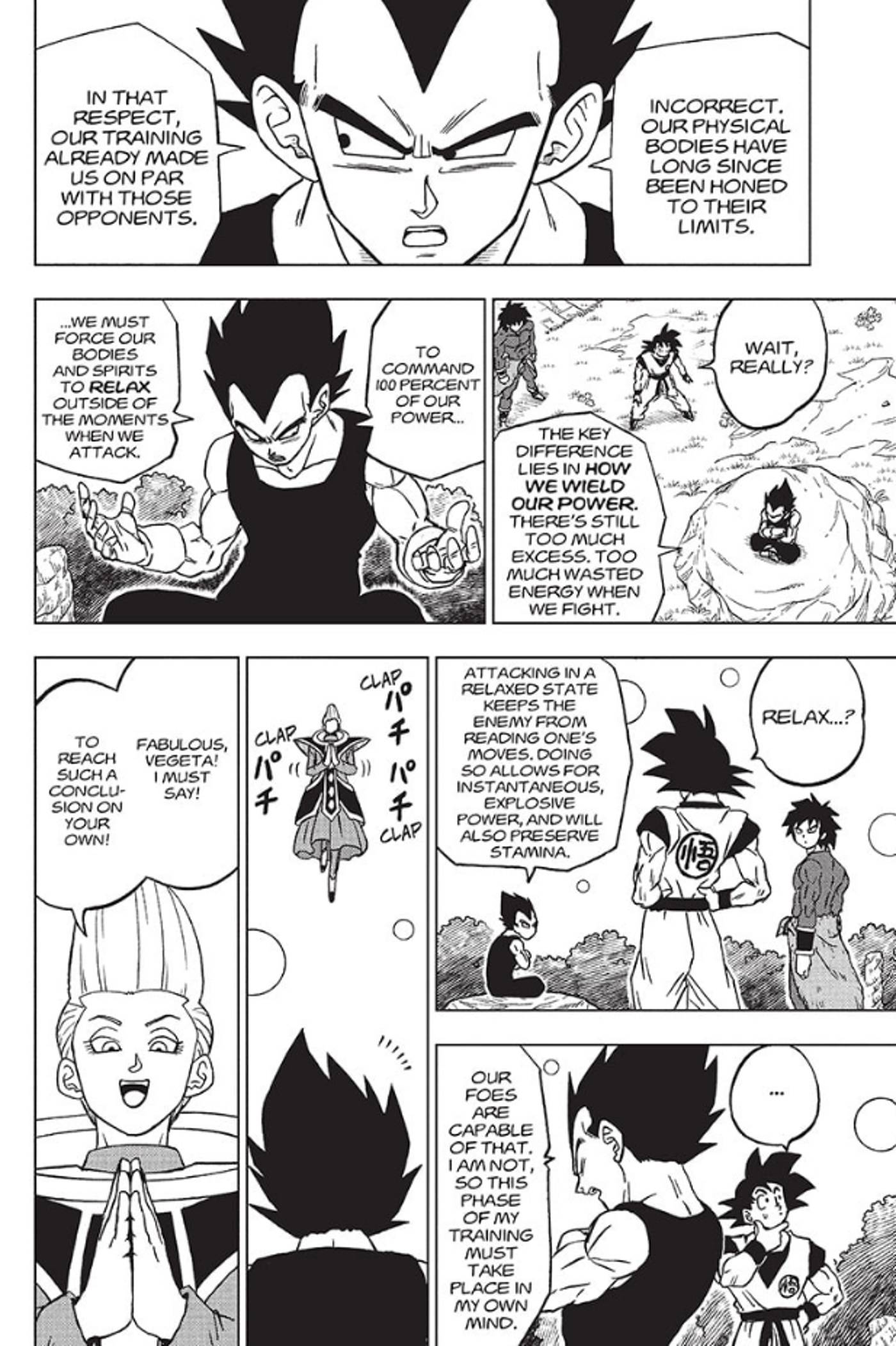
The power system of the Dragon Ball is known for being simple and straightforward, but this is no longer the case after the revelations in the latest chapter of Dragon Ball Super. Vegeta has spent a lot of time thinking about the recent defeats that he and Goku suffered against more powerful foes, and he realized that 'power level' is no longer an accurate measure of strength.

In chapter #93 of Dragon Ball Super, fans catch up with Goku and Vegeta after they've been conspicuously absent from the current story arc. While Goku is doing classic sparring with Broly (who recently debuted in the Dagon Ball Super manga), Vegeta is focusing on meditation training. When Goku asks him about this unusual regime, Vegeta reveals that it's pointless to keep training their bodies, as they are already on the same level as the foes who have beaten them recently, such as Jiren, Gas, and Frieza. The difference, Vegeta says, is in how they wield their power in battle.


Dragon Ball Super Has Finally Innovated The Franchise's Power System


The Dragon Ball power system has made history, influencing countless works that came after thanks to its simplicity and effectiveness. Dragon Ball was one of the first series to classify its fighters using a 'power level' based on their physical capabilities (which also include the amount of ki they possess). To increase their power level, fighters undergo physical training, but actual battle experience also plays an important role. Seeing Goku or Vegeta train with increased gravity or 'cheat' training time using the Hyperbolic Time Chamber is a familiar sight to fans of the franchise. However, over the years, shonen series have introduced more nuanced and complex power systems, making Dragon Ball Super feel a bit outdated at times.

Luckily, Vegeta's words in this chapter completely change the series' power system going forward. Foes such as Jiren or Gas have been presented as simply stronger than the heroes, superior to them in all physical aspects, following the franchise's tradition. However, according to Vegeta, he and Goku are actually on the same level as the enemies who beat them, at least physically. The difference is that these superior fighters were able to wield their power more effectively, without wasting energy and draining stamina, thus introducing more variables and parameters to evaluate a fighter's level. This concept has actually a long history in the series, dating back to the infamous Super Saiyan 3 'ineffective' form, all the way to Ultra Instinct, which is a state of supreme relaxation where no movement or energy is wasted.


Dragon Ball's Heroes Will Have To Train Differently From Now On

Thus, Vegeta's words in this chapter complete the slow but steady evolution that Dragon Ball Super has introduced to the franchise's power system. It will be interesting to see how things will actually change from now on. Perhaps, the Z Warriors' grueling, blood-spitting training sessions will be replaced by hours of meditation - which would surely be an odd sight for the series. What is certain is that Dragon Ball Super has finally innovated the franchise's iconic power system, making it deeper and more interesting.


The latest chapter of Dragon Ball Super is available from Viz Media.

Read More Comments

Dragon Ball Hour Battle Hour 2023 Unveils Dragon Ball Budokai Tenkaichi 4


Dragon Ball Z: Budokai Tenkaichi, the 2005 anime fighting game series by Bandai Namco Entertainment, will receive a fourth installment 16 years after the last mainline release.

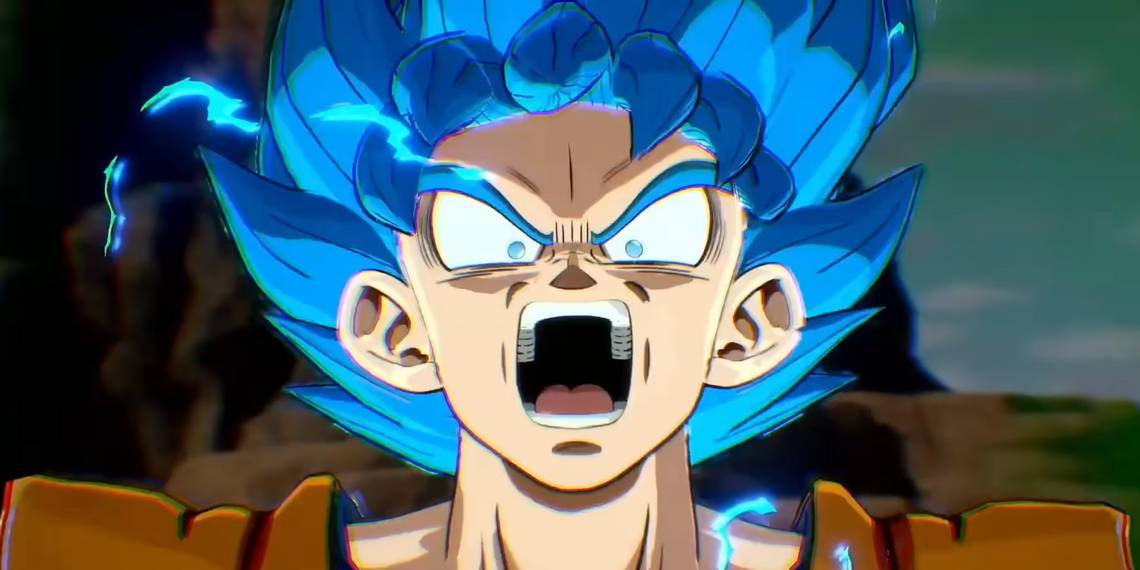
During the Dragon Ball Games Battle Hour 2023 event, Bandai Namco and Toei Animation released a teaser trailer for the latest entry in the Dragon Ball Z: Budokai Tenkaichi series (known as Dragon Ball Z: Sparking! in Japan). The teaser trailer showed clips of the previous games that dominated the PlayStation 2 era of video games before switching to brand-new footage of Dragon Ball Budokai Tenkaichi 4. The clip in question has Goku transforming into his Super Saiyan Blue form for battle, just as he did in the Dragon Ball Super anime.


When Is Dragon Ball Budokai Tenkaichi 4 Coming?
At the moment, there’s no announcement of a release date, platform or developer for Dragon Ball Budokai Tenkaichi 4. However, after a waiting period of 16 years, fans of the Dragon Ball Budokai Tenkaichi fighting series are thrilled that a new game is in active development. The last mainline title, Dragon Ball Z: Budokai Tenkaichi 3, was released on the PS2 and Nintendo Wii in 2007. Other titles related to the Budokai Tenkaichi series were released in the following years such as the 2010 Dragon Ball Z: Tenkaichi Tag Team for the PlayStation Portable and the 2012 release of Dragon Ball Z: For Kinect for the Xbox 360. Spike Chunsoft was the developer behind the original mainline games.

In recent years, the Dragon Ball Z video game franchise has grown significantly with multiple games that cover a variety of genres. The Dragon Ball Xenoverse games are 3D action role-playing games where the player can create a character and live in the Dragon Ball universe. Dragon Ball FighterZ, developed by Arc System Works (Guilty Gear, BlazBlue), is a 2.5D fighting game reminiscent of the Marvel vs. Capcom series. On the other hand, Dragon Ball Z: Kakarot is an open-world RPG where players experience the storyline of Dragon Ball Z from the Saiyan Saga to the Buu Saga. However, additional storylines from the anime are playable through DLC.

The Dragon Ball anime series has also grown since the 2005 fighting games. The Japanese original net animation Super Dragon Ball Heroes introduced a female villain named Aeos, who is quickly becoming a fan-favorite among the Dragon Ball community. Forgotten characters like Super Saiyan Broly – not to be confused with the Broly-like female fighter Caulifla from Dragon Ball Super – and Mai from Emperor Pilaf’s gang have returned front and center to the series. The most recent animated movie, Dragon Ball Super: Super Hero, also returned Piccolo and Gohan to their fighting form.

Source: Twitter via Famitsu

Read More Comments

Dragon Ball Super: Super Hero's Post-Credits Fight Scene Explained


Here's what happens in the Dragon Ball Super: Super Hero post-credits scene. With a visually striking animation style and a focus on Gohan and Piccolo, Dragon Ball Super: Super Hero takes a fresh approach to the Dragon Ball movie format. It brings back a couple of major threats from the past, and it proves that the Z-Warriors will continue to evolve. Most excitingly, Dragon Ball Super: Super Hero gives Goku and Vegeta's lifelong rivalry a memorable moment that was bound to happen ever since Dragon Ball Z's Saiyan Saga.

Dragon Ball Super: Super Hero delivers various satisfying payoffs that had been years in the making, including the return of the Red Ribbon Army, the creation of another Cell, Pan's training and first flight, and Goten and Trunks' highly anticipated growth spurt into their teenage years. Vegeta's greatest wish also came true, although not exactly in the way he always wanted.

Dragon Ball Super: Super Hero's post-credits scene sees Goku and Vegeta end a sparring match with one last attack. Exhausted, they exchange an extremely weak final punch that makes Goku collapse. Once Goku admits his defeat, Vegeta finally earns the right to say that he beat Goku in combat. Meanwhile, Beerus is busy sleeping, and Whis is too distracted to see what happens, but Lemo, Cheelai, and Broly enjoy the privilege of witnessing such a historic event.


Why Vegeta Beats Goku In Dragon Ball Super: Super Hero's End Credits Scene


Earlier in Dragon Ball Super: Super Hero, Vegeta explains that meditation gave Jiren an edge in the all-star Tournament of Power. According to Vegeta, what made Jiren so powerful wasn't raw strength or unlimited ki, but the ability to conserve energy for crucial moments, which he achieved through meditation. It's not clear for how long Vegeta has been practicing it, but evidently, it was enough to make the difference in his match with Goku, as his victory was primarily a feat of endurance.


Dragon Ball Super: Super Hero shakes up the series' power rankings. Piccolo managed to transform into the towering Orange Piccolo and Gohan achieved a "Beast" transformation. Like Vegeta, Piccolo didn't progress by sheer strength training, but by unlocking his inner power — with the help of Shenron's wish, of course. In a surprising twist, Gohan revealed that he found time to train the Special Beam Cannon technique, which may have had a part in his attainment of the Beast form. Dragon Ball Super: Super Hero proves that there's a long road ahead for all the Z Warriors, and with threats like Cell Max appearing so suddenly, new training methods like meditation will certainly be helpful.

Read More Comments

'Dragon Ball Super: Super Hero' Earns $10.7 Million on Opening Day


In its first weekend of its US release, Dragon Ball Super: Super Hero is set to have a strong opening at the box office. The new animated film, released in the US and Canada on Friday, August 19, with its opening day at the box office bringing in $10.7 million, is projected to top the box office this weekend by bringing in a total of $21 million.

Dragon Ball Super: Super Hero launched in 3,007 theaters, making this the widest release ever for an anime film. The film was first released on June 11, 2022, in Japan, grossing about ¥2.4 billion, or $18 million since its opening. Following up behind the new animated film at second place at the box office is Idris Elba's new thriller Beast, which was also released on August 19, bringing in $4.2 million on Friday from 3,743 theaters with a projected $10.1 million debut.

This projected opening weekend of $21 million puts it just behind Demon Slayer the Movie: Mugen Train which brought in $21.1 million in its opening weekend in 2020, making it the highest opening weekend box office gross of any foreign language film in U.S. history. This opening is an increase from the 2018 film, Dragon Ball Super: Broly, which saw $9.8 million in its opening. This was also comparable to fellow Funimation film Jujutsu Kaisen 0: The Movie which was released earlier this year in March and saw an $18 million debut.


Dragon Ball Super: Super Hero is the 21st Dragon Ball film with it being the second film with the "Super" subtitle and follows fan-favorite characters Piccolo and Gohan as they face off against a new "Super Hero" Android threat, known as Gamma 1 and Gamma 2, created by Dr. Hedo for the Red Ribbon Army. Collider's review from Erick Massoto gave the film a B+. Massoto praised the film's CG animation, story, and fight scenes, describing the film as "a fun movie that knows how to use its humor and has fun with the fights, but it’s very conscious that you need to care about those characters to enjoy the ride."

Dragon Ball Super: Super Hero is currently in theaters. Check out a trailer for the new film and read its official synopsis down below.

The Red Ribbon Army was once destroyed by Son Goku. Individuals who carry on its spirit have created the ultimate androids -- Gamma 1 and Gamma 2. However, these two androids call themselves superheroes and start attacking Piccolo and Gohan.


Read More Comments

Dragon Ball Super: Super Hero Gives Piccolo His Own Version of Super Saiyan


The Dragon Ball franchise has always had transformation baked into its concept, going all the way back to Goku's transformations into his Great Ape form. This became especially prevalent in Dragon Ball Z and the ensuing Dragon Ball Super, as Goku and his Saiyan allies kept finding new variants of Super Saiyan to achieve.

Now, the franchise's other signature alien fighter -- Piccolo -- has gotten his own answer to that boost. Dragon Ball Super: Super Hero formally introduces the Orange Piccolo form, which is both impressive and quietly a pretty good joke about the nature of transformation in the series.


Dragon Ball Super: Super Hero introduces a new group of androids constructed by Dr. Gero's grandson Dr. Hedo. With Goku and Vegeta otherwise occupied and unable to get involved in the conflict with the resurgent Red Ribbon Army, it falls to Piccolo to rally a defense against their machinations. This includes a bit of subterfuge on his and Pan's part, as well as luring an academic-minded Gohan back into the fray.

Part of his plan ultimately involves getting his own power-up, courtesy of the wish-granting Shenron. This allows Piccolo -- a strong fighter whose capabilities have been dwarfed by his Saiyan peers -- to gain a new amount of power to draw upon. The dragon unlocks Piccolo's full potential (similar to Gohan and Krillin's experience on Namek), and even gives him a new transformation.

This power boost ultimately gives Piccolo the ability to access the new form during his battle with Gamma-2. Similar to Super Saiyan, the transformation comes with a change in color -- albeit the Namekian doesn't get any spiky new features. Instead, his eyes become red and his typically green body turns orange. His jaw becomes more defined, and he gains a glowing energy version of a Namekian symbol on his back.

An impressive endurance boost comes with this new form, as Piccolo is able to withstand blows that had sent him flying just minutes earlier. His increased size and mass doesn't translate to any new speedy attacks, but Piccolo's strength and durability allow him to tank a lot of damage -- which proves to be a crucial part of the ultimate strategy to defeat Super Hero's final threat, Cell Max.


In an interesting detail, Orange Piccolo's appearance actually bears some similarity to other transformations in the franchise. Piccolo bulking up in body mass calls to mind the Super Saiyan 1.5 form introduced during the "Cell Saga" -- a similar power boost for Saiyans that provided additional strength (albeit at the cost of mobility). Piccolo's jawline and cheeks are tweaked slightly by the transformation and actually give him something of a similar appearance to Lord Slug, the Namekian villain of the classic Dragon Ball Z movie Lord Slug. But for a character who has consistently been a fan-favorite hero, it's a long overdue power boost that puts him more on par with the likes of Goku, Gohan and Vegeta.

Orange Piccolo is also something of a fun subversion of typical Dragon Ball transformations, which plays well with the rest of Super Hero's more comedic tone. The transformation doesn't change Piccolo's personality at all (as opposed to the colder, clinical shift Gohan's new forms seem to induce in battle), and he remains the group's problem-solver.

Piccolo doesn't notice the shift in his body tone, and ultimately refuses to call the move his "Super Namekian" form or give it a unique title. Instead, this impressive new peak for his fighting prowess is just dubbed "Orange Piccolo" because he can't be bothered to think of anything better. Still, it's exciting to see him gain such new potential -- and it'd be exciting to see him utilize this boost in future storylines.

Read More Comments

Dragon Ball Super Kills Off a Major Villain


Dragon Ball Super Chapter 87 officially kills off Gas, the main villain of the "Granolah the Survivor Saga" arc.

In the latest entry in the manga series, Goku and Vegeta face off against Gas, who appears in an old-looking form after having seemingly been defeated last chapter. However, the two Saiyans aren't able to beat the villain, even using True Ultra Instinct and Ultra Ego. Just when all looks lost, Frieza appears and kills both the villain and Elec, the leader of the Heeters gang, with no problem. In the end, the last two remaining Heeters, Oil and Macki, opt to join Frieza.

Who Was Dragon Ball Super's Gas?

Prior to the start of the current arc of Dragon Ball Super, "Granolah the Survivor Saga," Gas worked with the Heeters on behalf of Frieza, helping the villain in his conquering of the universe. However, Gas ended up fighting against Bardock, Goku's father, and losing, which angered him greatly.

At the start of "Granolah the Survivor Saga," the titular Cerealian used his planet's Dragon Balls to make himself the most powerful fighter in the universe. Soon, though, the Heeters tricked Goku and Vegeta into coming to fight Granolah. While the three were preoccupied, they used Planet Cereal's Dragon Balls to make Gas the strongest fighter in the universe, a title he lived up to by besting Goku, Vegeta and Granolah in combat. The villains did this with an eye towards overthrowing Frieza.

What Is Dragon Ball Super?

The original Dragon Ball manga debuted in 1984 in the pages of Weekly Shōnen Jump. Soon, the story was adapted to anime. Since then, the franchise has flourished, and there have been numerous video games, films, and other media based on the series. Dragon Ball Super itself started in 2015 and ran until 2018. The story itself has continued both in the manga and in the form of films, though there's been some divergence in terms of the story being told in the two mediums.

New chapters of Dragon Ball Super release monthly in English through Viz Media. The most recent entry in the anime series is Dragon Ball Super: Super Hero. That film is available in theaters in North America now after having proven successful in Japan

Read More Comments