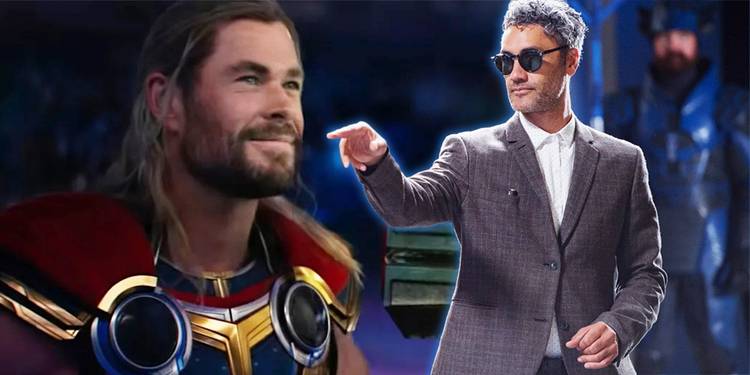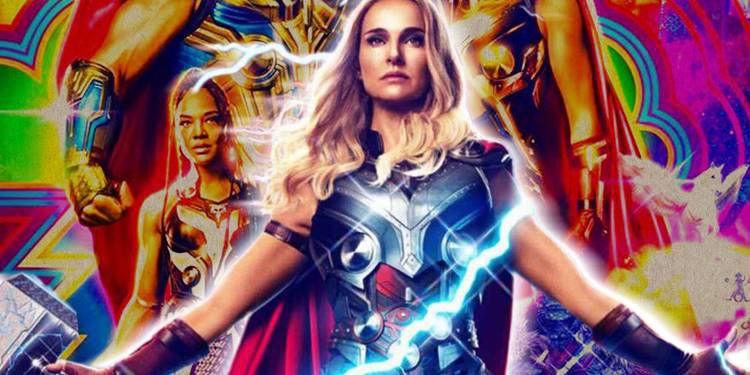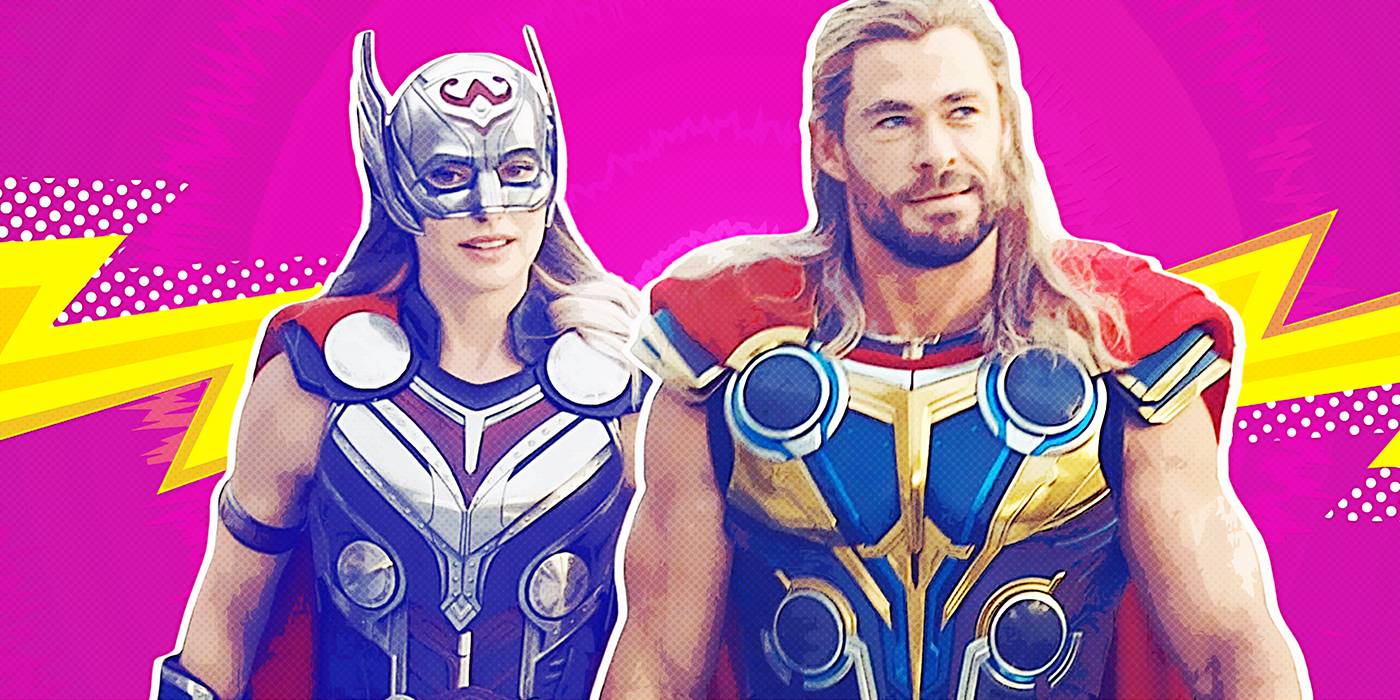
Out of all the comedic subgenres, none are arguably as iconic as the 'romantic comedy.' From classic genre staples like Billy Wilder's Roman Holiday and The Seven-Year Itch and onwards over the decades to the days of genre queens like Julia Roberts, Sandra Bullock, and Meg Ryan, the rom-com may have had some lulls at certain points, but its sweet and saccharine DNA has remained prevalent as ever. Case in point is the latest superhero spectacle from Marvel Studios, Thor: Love & Thunder. Taika Waititi returned to the director's chair following Thor: Ragnarok, to deliver a similarly clever but thematically different take on the self-proclaimed 'strongest Avenger.'
The romantic comedy genre is one that's full of distinct tropes. The meet-cute, the burgeoning relationship montage, the third-act breakup, love being rekindled, the crazy ex, the scene that pulls on your heartstrings. Some will look at tropes as a bad thing. It often adds an extra layer of predictability to the story, but for fans of the romantic comedy (such as this very writer), it will often bring a sense of comfort. While some may have left Thor: Love and Thunder feeling disappointed, others were satisfied, but for a completely different reason.
There's an opinion that's become popular among the online film community that many of the MCU films represent different genres. Whether one agrees with that sentiment is up to them. Guardians of the Galaxy is space opera, Doctor Strange in the Multiverse of Madness is a horror movie, Spider-Man: Homecoming is a coming-of-age tale, Ant-Man is a heist movie, you get the point. With Thor: Love and Thunder we get Marvel's take on a romantic comedy.
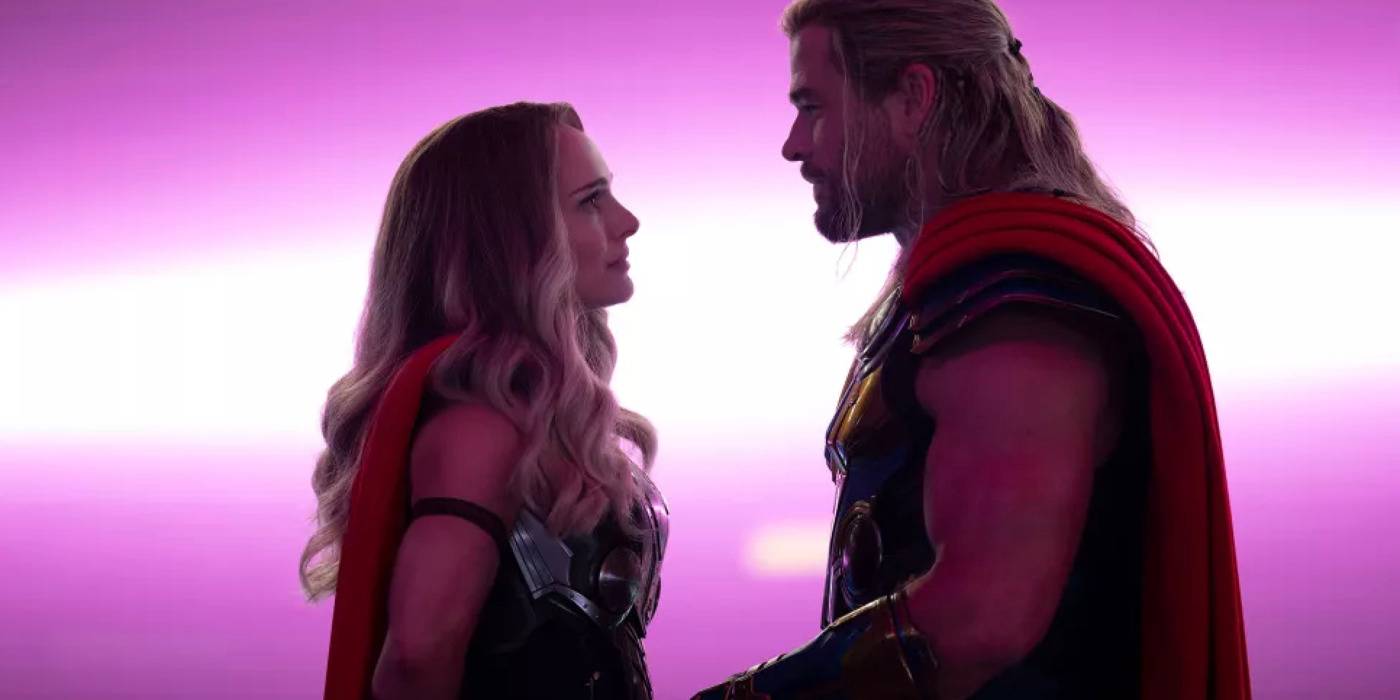
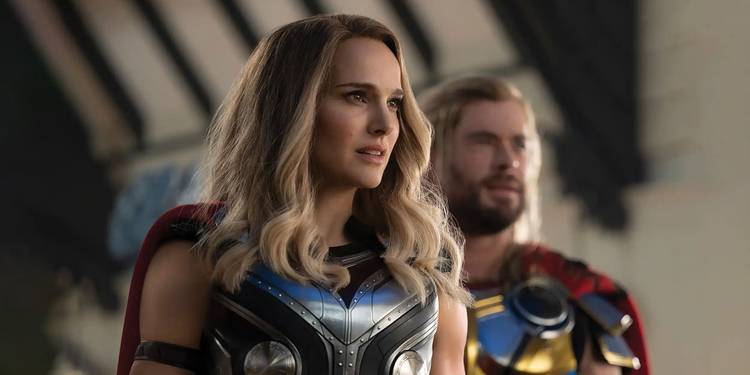
First and foremost, superhero films have been noticeably dodgy with their romantic subplots. For every Tony Stark and Pepper Potts, there are dozens more love stories that lack that same spark. The science-meets-magic romance of Thor (Chris Hemsworth) and Jane Foster (Natalie Portman) was initially one of those. It was flat, to be blunt. Love & Thunder notably tried to fix this, with the film being the Marvel Cinematic Universe's first true romantic comedy. Love is in the title after all. The biggest surprise of the film is that the tropes of the romantic comedy aren't just haphazardly injected into the romance of Thor and Jane, but it's in the film's DNA.
Love and Thunder often plays around with these kinds of superhero tropes, sometimes deciding to follow them to a tee, and other times it will attempt to subvert them. Fans already saw Thor and Jane have their so-called meet-cute in the 2011 film, but that initial lack of chemistry made it difficult to buy into that romance. Waititi decides to give us that romance and subsequent break-up using one of the most famous rom-com tropes, the 'montage.' Set to the ABBA classic "Our Last Summer," we see Thor having a seemingly ideal suburban romance with Jane Foster. They have movie nights, go to costume parties, Roller Skate with Mjolnir... y'know, classic couples activities. The happiness soon begins to fade as their romance starts to fizzle out from arguing about plates, phone calls from "Nick Furry," and Thor eventually leaving and returning to find a note from Jane. Much like films of the genre like About Time, The Break-Up, and Definitely Maybe use tunes like "How Long Will I Love You," Queen's "You're My Best Friend," and Frank Sinatra's "I've Got A Crush On You," Love & Thunder shows us a different side of the God of Thunder in a montage that would obviously feel out of place in any other Marvel film.
Hell, even the crazed romantic partner trope plays a significant and memorable role in the film, but not in the way you'd expect. Love and Thunder opts to demonstrate this trope using Thor's signature two weapons of choice: the newly reformed Mjolnir and Stormbreaker. In his initial scenes with Jane, Thor is shown to be a bit jealous of his ex-girlfriend and ex-hammer's newfound love, to the point where Stormbreaker ominously floats over to the God of Thunder's side, reminding him "I'm still here." Thor even tries to make it up to Stormbreaker at one point, giving the ax its "first beer" as it guides his ship.
Thor and Jane even briefly get back together, at least before Jane's sacrificial demise. While surely, their break-up lasted significantly longer than most breakups in romantic comedies, their eventual kiss brings a little bit of satisfaction to both of them, even under tragic circumstances. While plenty of romcoms love to tie up the central love story in a neat little bow, Thor: Love and Thunder doesn't fully commit to giving its central couple their happily ever after. Instead, the film concludes with Jane making her way into Valhalla and Thor becoming the adopted father to Gorr's daughter Love (and a damn good one at that).
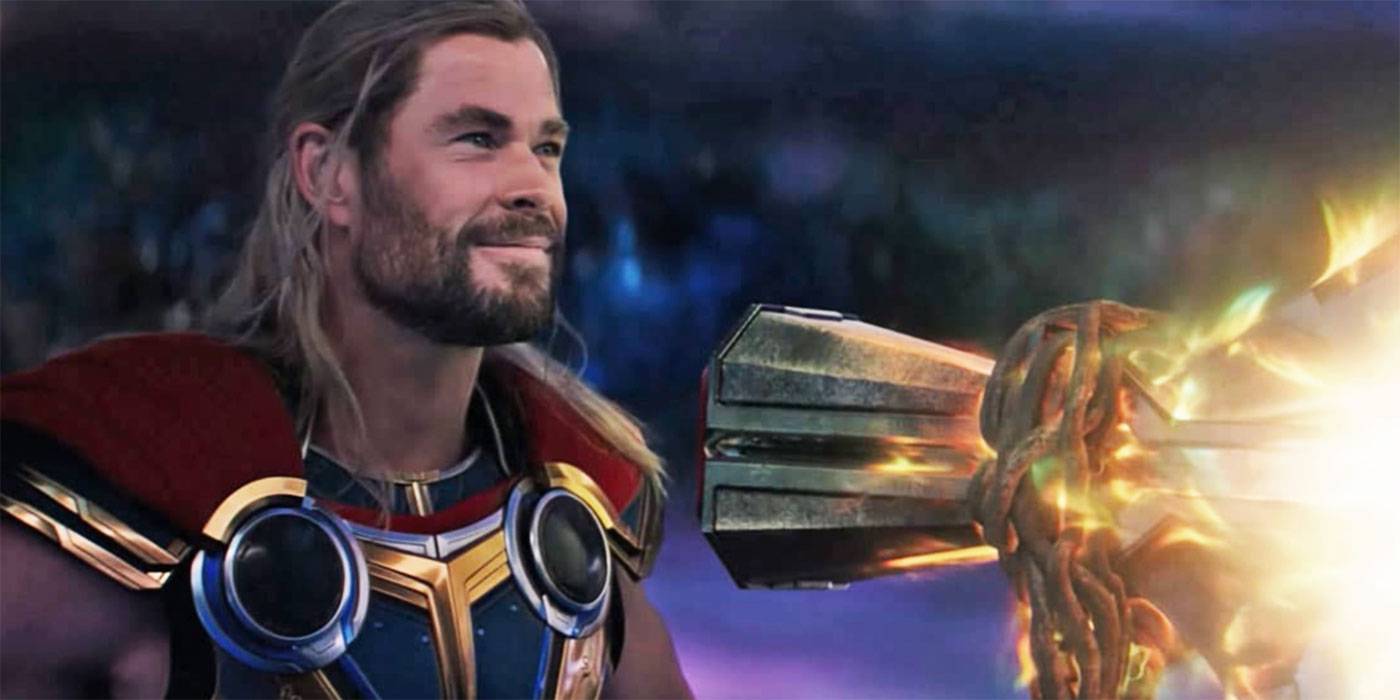
Plenty of romantic comedies try to give the audience characters that they can relate to, and Love and Thunder makes the God of Thunder feel more human than ever. Thor has had quite the evolution over the course of his MCU appearances (but that's a whole other story), and his personality in Love and Thunder may double down on giving us himbo Thor, but it also shows his continued vulnerability after his appearance in Avengers: Endgame. While both of Waititi's Thor films are some of the more comedy-driven Marvel films, the latest entry also reminds us that the titular hero has been plagued by tragedy and loss. Not only has he had to go through the loss of his adopted brother, several times, but he has also dealt with the loss of both his parents, Heimdall, and being racked with guilt after feeling responsible for "The Snap." The Thor here shows a fear of commitment, one who is trying to recapture his golden days by hanging out with the Guardians of the Galaxy, but is also hesitant to move forward in life, afraid of any future loss or failures that could potentially await him, and we feel his pain when Jane reveals her cancer diagnosis to him. The modern romantic comedy has moved past trying to portray men and women in regressive manners, relying on perfectionism and stereotypes, and instead has brought much more humanity. Films like Silver Linings Playbook and The Big Sick can show the demons that haunt the characters of Pat and Kumail, and Love and Thunder is able to portray that vulnerability too, through Thor.

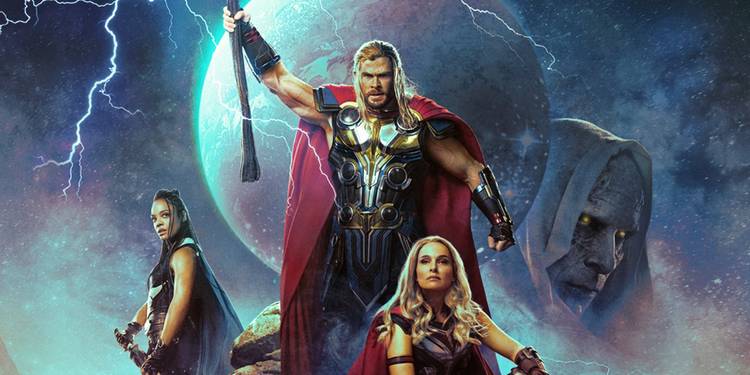 Thor: Love and Thunder is the latest entry in the Marvel Cinematic Universe and the fourth Thor movie. Reuniting old cast members and a returning director, the movie is very much a sequel to 2017's over-the-top Thor: Ragnarok. Combining cosmic mythology with '80s cheese and whimsy, the film is definitely a spectacle that begs to be seen on the big screen.