Oppenheimer's Black & White vs. Color Sequences Meaning Explained

Oppenheimer uses both black-and-white and color imagery for its scenes, and Nolan has a specific reason for these differences in filming. Christopher Nolan’s Oppenheimer is a biopic centered around J. Robert Oppenheimer, the man who created the atomic bomb. Oppenheimer depicts the events leading up to the atomic bomb’s first detonation and the consequences thereafter. Based on the biography American Prometheus by Kai Bird and Martin J. Sherwin, Oppenheimer brings an all-star cast to tell the story of the Manhattan Project, Oppenheimer’s relationship with Einstein, and the deadly development of the first nuclear weapons.

Cillian Murphy leads the Oppenheimer cast as the titular character and is joined by Robert Downey Jr., Emily Blunt, Florence Pugh, Matt Damon, Rami Malek, and Jack Quaid, to name of few. Oppenheimer is Christopher Nolan’s first biopic and is expected to be a box office hit, especially with its famous battle against Barbie. Nolan has broken boundaries with Oppenheimer and has even used a real atomic bomb to create a detonation scene. Nolan’s use of filming in black-and-white, as well as color, plays an important role in Oppenheimer too, and the differences in the scenes have strong reasoning.

Oppenheimer's Black & White Scenes Are Objective


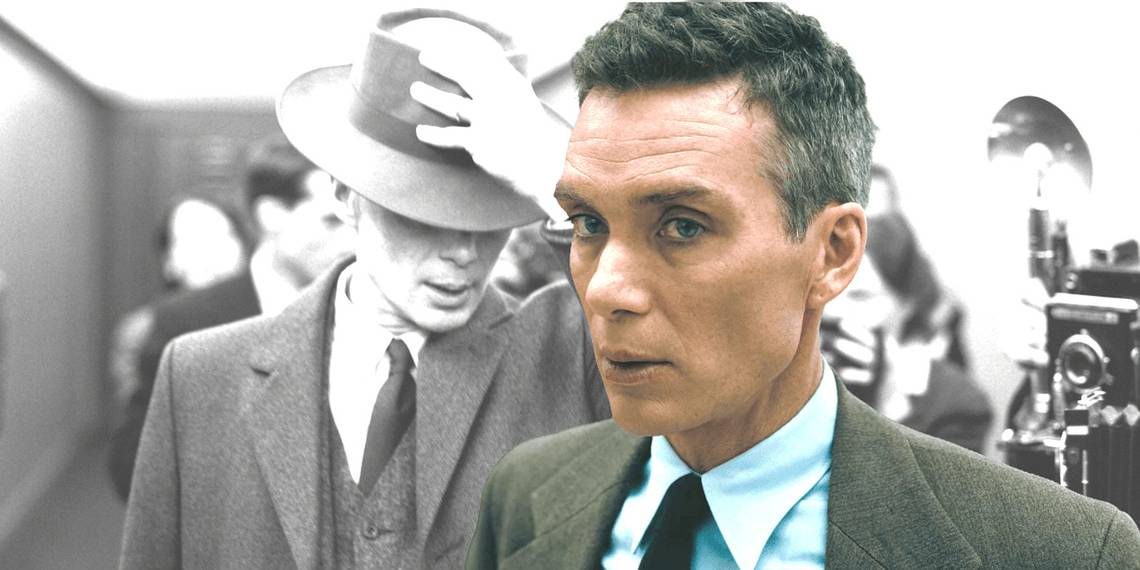
Unlike Nolan’s Memento, which used black-and-white and color scenes to distinguish the movement of time, Oppenheimer’s use of black-and-white and color scenes represents the shifting perspective. The black-and-white scenes are objective. They are moments in history that are not influenced by opinion or emotions. Oppenheimer is a historical figure, and his creation of the atomic bomb is extremely important in World War II history. Part of Oppenheimer’s life is recorded history because of this, such as the hearings against him in 1954 when he refused to give up his atomic weapon security clearance.

The majority of Oppenheimer's black and white sequences are of the hearing against Oppenheimer after the weapon has been detonated, with Downey Jr.’s Lewis Strauss leading the case. The black-and-white scenes in the film present the historical perspective of what happened to Oppenheimer after the atomic bomb was used. The scenes are less about him and more about the repercussions of the bomb, as seen by others involved in the case rather than being presented from Oppenheimer's point of view.

Oppenheimer's Color Scenes Are Subjective (And First Person)


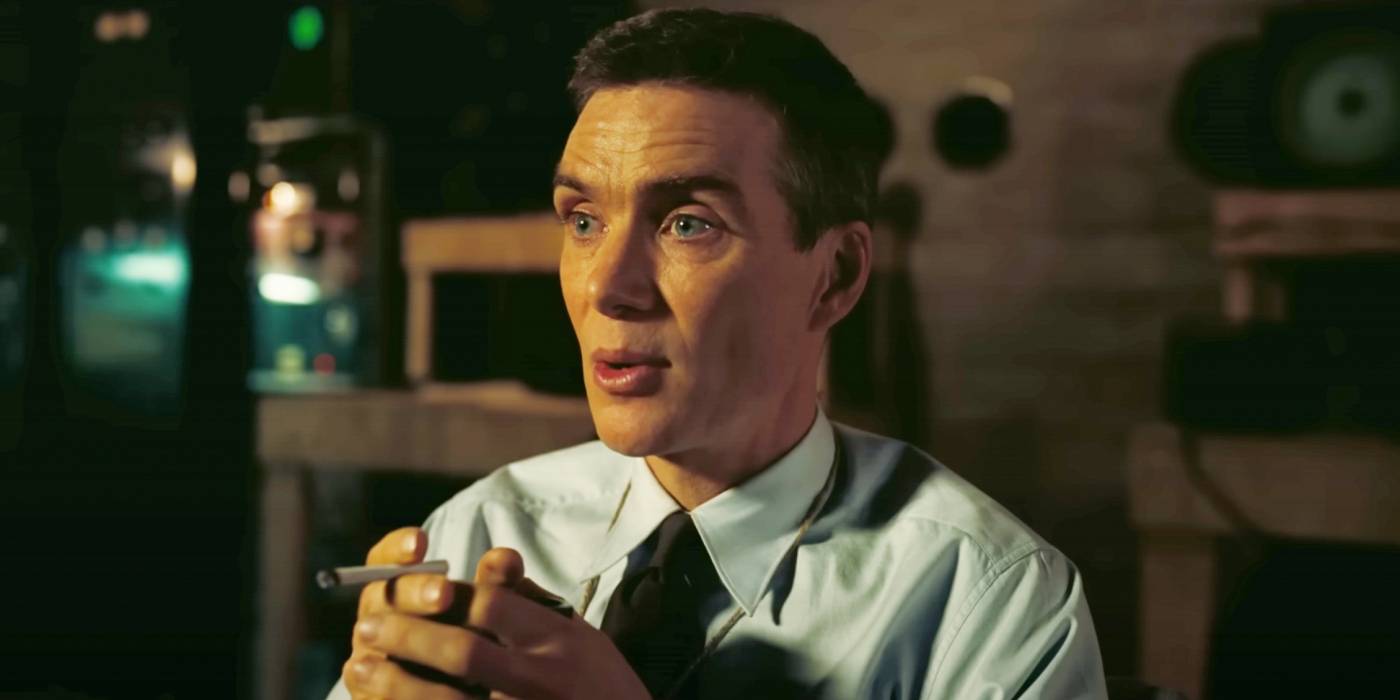
Oppenheimer’s color scenes make up most of the movie and are the subjective elements of the story, as well as Oppenheimer’s perspective. Nolan wrote these scenes in the first person and are not the exact historical facts of Oppenheimer’s story but the adapted side. In these scenes, Nolan has created moments between Oppenheimer and his colleagues, his wife, and moments alone that show Oppenheimer’s own moral battle with creating the atomic bomb and how the desperation of war led to the scientific invention. Oppenheimer’s journey to creating the atomic bomb is important as it explains his reasoning, but these are all subjective and can only be explored from Oppenheimer’s perspective.

Arguably the major difference between the black-and-white and color scenes is their level of emotion in the film. There is a heightened emotional core found in the color scenes as Oppenheimer battles with the need to make the atomic bomb as he claims they should have the bomb rather than the Nazis. Life in the Manhattan Project is also a significant aspect of the subjective view as people were locked off from the world to ensure the project remained completely secret. The color scenes in Oppenheimer are much more tense and personal, which fits with Nolan’s reasoning as the brighter colors match the heightened emotions.

Oppenheimer's Color Sequences Represent Fission: What It Means


At the beginning of the movie, Nolan provides a further separation between the color and black-and-white sequences in the film. The color sequences are labeled "Fission", which adds another level of depth to why Nolan chose the dichotomy of Oppenheimer's color palette. In science, the official meaning of the word fission is described as the splitting or separating of something into two or more parts. Fission, therefore, highlights how the subjective, colored sequences of Oppenheimer are there to compartmentalize the film's story.

The colored sections of the film break up the story into multiple parts, from Oppenheimer's early life in education, his various relationships, and of course his building of the atomic bomb. Similarly, the subjective sequences in Oppenheimer feature the aforementioned heightened emotion of the titular character and highlight his troubles with building the bomb and its consequences. As such, the colored sections of the film are subjective to Oppenheimer's point of view, showcasing the building of the atomic bomb that essentially broke down Oppenheimer's life after that due to the mental effects it had on him, representing fission through the film's story and characters.

Oppenheimer's Black & White Scenes Represent Fusion: What It Means


Conversely, Nolan labels the black-and-white sections of the film as "Fusion". In science, fusion is the opposite of fission, that being the joining of two or more parts together to form a single entity. Through Oppenheimer's non-linear storytelling, the black-and-white sections of the film go to inform the final act, in which the rivalry between the titular scientist and Lewis Strauss comes to a head. Prior to some revelations in the third act, it is somewhat unclear how Oppenheimer's story fits together.

This means that the black-and-white sections of Oppenheimer take the disparate, separate - or fissioned - parts of the film's colored sequences, and fuses them together. All of Oppenheimer's life as seen through his eyes in the fission sections of the film are brought up to inform the black-and-white section of the story. As such, the black-and-white scenes fuse all the different elements of Oppenheimer together by the film's ending, which allows Nolan to tell a complete story through a genius color palette trick all while relating it to the scientific mind of Murphy's titular "Father of the Atomic Bomb".
Read More Comments

Oppenheimer Being A "Horror Movie" Makes Christopher Nolan's $100 Million Box Office Comeback An Even Bigger Risk


Christopher Nolan has described his upcoming Oppenheimer biopic as a horror movie, and while that is exciting, it puts Nolan's $100 million box office comeback at an even bigger risk. Nolan has a track record of making some fantastic movies, meaning that the film will undoubtedly be great even if the director puts a horror spin on the story of J. Robert Oppenheimer. However, the horrific tone and themes of Oppenheimer put the movie's success in jeopardy, which is a surprising choice considering how much is at stake for Christopher Nolan's box office performance.

Oppenheimer will tell the story of J. Robert Oppenheimer, the scientist who famously helped build and later regretted his involvement in the atomic bomb. Oppenheimer will be Nolan's first project since Tenet, the popular sci-fi movie from 2020. While Tenet was critically well-received, Tenet's box office performance was pretty disappointing, with it only making $365.3 million against a $200 million budget. Although it is smaller, Oppenheimer's $100 million budget means that the movie still has a lot riding on it, and the latest news about Christopher Nolan's upcoming film shows just how risky the movie is.

Oppenheimer Being A "Horror Movie" Is A Huge Risk

Oppenheimer has been described as a horror movie by a filmmaker that saw the film early, and Christopher Nolan completely agrees. Nolan has cited Oppenheimer's intensity, darkness, and nihilistic themes as reasons why the film could be considered part of the horror genre, even if it is missing many of the elements more traditional horror movies are known for. Although this is an interesting spin on the life story of J. Robert Oppenheimer, it makes the movie a huge risk.

Oppenheimer's horror movie tone could be a turn-off to many viewers who simply want to see a straightforward biopic of J. Robert Oppenheimer. On top of that, Nolan hasn't really delved into the horror genre before, with him typically sticking to tense sci-fi and action movies. Messaging about Oppenheimer being a horror movie could also confuse fans, with the term focusing on the nihilist themes that general audiences may not pick up on from the trailers. After the failure of Tenet, Nolan really needs Oppenheimer to be a success, which makes it surprising that he is taking this big horror risk on Oppenheimer.

Oppenheimer Was Already Risky For Christopher Nolan

Referring to Oppenheimer as a horror movie only makes the project scarier, as it was already a huge risk for Christopher Nolan. This is mainly due to it following up on Tenet's aforementioned box office failure, which was mostly due to it coming out right as theaters were beginning to open after the COVID-19 pandemic. However, there are also several other risks built into the project as well. Oppenheimer is incredibly morally dark, with it being about the scientists who invented the bomb that killed hundreds of thousands of innocent Japanese people in WWII. This may prevent some viewers from seeing it, as it will undoubtedly be a depressing film.

Oppenheimer is also a historical biopic, which is a new genre for Nolan. Oppenheimer may not attract the same target audience as movies like Inception, Interstellar​​​​​​, and The Dark Knight, meaning Nolan may have to find a new base of fans for the film to succeed. Also, J. Robert Oppenheimer isn't nearly as popular as the subject of other biopics like Elvis or Mark Zuckerberg. The cherry on top of this risky cake is that much of Oppenheimer is in black and white. While there's nothing wrong with black-and-white movies, it may make the film seem too artsy for general audiences, possibly hurting the project's box office returns.

Oppenheimer As A Nolan Horror Movie Is Actually Perfect

Although it may be risky, and it may sound like it doesn't fit, treating Oppenheimer as a horror movie is actually perfect. The story of J. Robert Oppenheimer is the story of a man who had a hand in the invention that led to hundreds of thousands of deaths, and the guilt that comes with that. Oppenheimer was a tragic figure, and Christopher Nolan's Oppenheimer is definitely attempting to capture that theme. J. Robert Oppenheimer's story is dark, disturbing, and depressing, with it conveying the same feeling that some of the best existential horror movies have captured. Because of this, Christopher Nolan's horror take on Oppenheimer is the perfect choice.
Read More Comments

"They Can't Speak": Oppenheimer Screening Reactions Detailed, Audiences Left With "Element Of Fear" Per Nolan


Oppenheimer director Christopher Nolan describes the effect that his upcoming historical epic is having on audiences during early screenings, with some people having a strong emotional reaction. Based on the life and career of American theoretical physicist J. Robert Oppenheimer, Nolan's upcoming film chronicles the creation of the first atomic bomb during the Second World War. With its R rating and its exploration of a real person's life, the film is already shaping up to be quite a departure from Nolan's previous movies.

Ahead of the Oppenheimer release date next month, Nolan talks about how early screenings of the film are going in a recent interview with Wired. The director reveals that there has been a particularly strong response so far, both in terms of the fear the film has inspired but also in terms of the audiences' relationship to the characters. Check out Nolan's full comment below:

“Some people leave the movie absolutely devastated. They can't speak. I mean, there's an element of fear that's there in the history and there in the underpinnings. But the love of the characters, the love of the relationships, is as strong as I've ever done.”

How Oppenheimer Could Be Different From Past Nolan Movies

Aside from earlier films like Memento and Insomnia, Nolan has mostly been focused for the last 20 years on making big-budget blockbuster fare. The films often feature a lot of action and also frequently incorporate elements of science-fiction. Oppenheimer, while boasting a big budget, doesn't seem like a film that will feature either of these elements.

Instead, Nolan will seemingly dig into character like he never has before, exploring one man's life under a microscope as it relates to one of the most dangerous creations in all of human history. If audiences are indeed leaving screenings feeling fearful, the movie could be tapping into ideas regarding humanity's destruction in a thoughtful and serious way. This unique approach hasn't just proven affecting for general audiences but for historian and Oppenheimer biographer Kai Bird as well, whose recent review of Oppenheimer suggests that the film could actually start a national conversation about issues relating to technology and science.

Oppenheimer is also rated R, Nolan's first film to earn the rating since 2002's Insomnia. This means that the film could dig into the deeper and darker aspects of its title character's life and won't shy away from the ugly details that often can't be included in films with his usual PG-13 rating. Many questions remain about Oppenheimer, but Nolan's latest update is sure to only increase the level of anticipation for his next movie.

Source: Wired
Read More Comments

How Oppenheimer’s VFX Supervisor Was Challenged By Christopher Nolan


Oppenheimer director Christopher Nolan opens up about how he challenged his VFX supervisor with visually representing the titular scientists' inner thoughts. The biographical film focuses on J. Robert Oppenheimer (Cillian Murphy) and his work on developing nuclear weapons in the Manhattan Project. The film, which has a budget of $100 million, will be almost 3 hours long.

Speaking with Empire, Nolan revealed how he challenged VFX supervisor Andrew Jackson during the production of Oppenheimer. The director said he wanted Jackson to create visual representations of Oppenheimer's inner thoughts, but to do so without any CGI. Check out what Nolan had to say about his idea below:

The first person I showed the script to when it was finished after [his producer and wife] Emma [Thomas] read it was Andrew Jackson, the visual effects supervisor. I said to him, ‘We have to find a way into this guy’s head. We’ve gotta see the world the way he sees it, we’ve gotta see the atoms moving, we’ve gotta see the way he’s imagining waves of energy, the quantum world. And then we have to see how that translates into the Trinity test. And we have to feel the danger, feel the threat of all this somehow.’ My challenge to him was, ‘Let’s do all these things, but without any computer graphics.’

How Oppenheimer Could Be Christopher Nolan's Biggest Undertaking

Seeing Oppenheimer's inner mindset without using any computer-generated effects underscores just how massive an undertaking the film is. Oppenheimer's massive runtime indicates the movie will be diving deep into his life, his work, and the consequences of the Manhattan Project. By displaying his inner thoughts on an atomic level, but without CGI, Nolan has ensured Oppenheimer will be unlike anything he's ever directed before.

The visual effects of Oppenheimer aren't the only eye-catching part of Nolan's upcoming biopic. Oppenheimer is Nolan's first R-rated film in 20 years, with his 2002 psychological thriller Insomnia being his last movie to carry an R-rating. Not only will Oppenheimer stand out visually in Nolan's film catalog, but it will likely feel different from the many PG-13 films he's made in the past two decades.

It's unclear how the visual spectacle of Oppenheimer's thoughts will play out in the film, as well as what Jackson did to make them come to life without computer imagery. However, the many sequences of fire and explosions in Oppenheimer promotional material may be hinting at how the scientists' mind will come to life in the movie. The visual representation of Oppenheimer's thoughts working on the Manhattan Project will be revealed when the movie arrives in theaters on July 21.

Source: Empire
Read More Comments

Christoper Nolan's Oppenheimer Is So Accurate Even The Extras Are Brilliant Scientists


Even the extras have a story in Christopher Nolan's upcoming film Oppenheimer. Based on American Prometheus by authors Kai Bird and Martin J. Sherwin, Oppenheimer follows the story of J. Robert Oppenheimer (Cillian Murphy), the man known as the "Father of the Atomic Bomb". The film walks through the development of the first nuclear weapons through the developments at Project Manhattan during World War II.

In an interview with Entertainment Weekly, Nolan explained that he made sure certain extras cast in Oppenheimer were real-world scientists with a firm understanding of nuclear weapons. While Murphy was desperate to play the lead for Nolan, he was gearing up to play a nuclear physicist without much experience in science. Thankfully, he had those experts around him who were more than happy to offer in-depth speeches about nuclear arms. Check out Nolan's quote below:

"I was thinking that it even applied to the extras. We were in the real Los Alamos and we had a lot of real scientists as extras. We needed the crowd of extras to give reactions, and improvise, and we were getting sort of impromptu, very educated speeches. It was really fun to listen to. You've been on sets where you've got a lot of extras around and they're more or less thinking about lunch. These guys were thinking about the geopolitical implications of nuclear arms and knew a lot about it. It actually was a great reminder every day of: We have to be really on our game, we have to be faithful to the history here, and really know what we're up to."

How Nolan Is Ensuring An Accurate Oppenheimer


It isn't too much of a surprise that the experts around Oppenheimer would influence them to stay on track and focused on Project Manhattan. After all, they were all well-versed in the influence of nuclear weapons on worldwide politics and their day-to-day experiences. Their involvement just shows Nolan's commitment to ensuring that he can make Oppenheimer into the thriller that he needs it to be.

The true story of Oppenheimer changed the world and continues to influence it even today. Any inaccuracies will be noticed and picked apart. Nolan is well aware of that fact, which is why the $100 million biography is so insistent on staying the course. It isn't Nolan's first foray into science-focused films after the epic Interstellar drew criticism for some inaccurate applications of theoretical physics.

Oppenheimer, however, should be easier to get right. Most of the topics in Oppenheimer are settled science and not-so-distant history, making it easier for Nolan to delve into the details through more than just reading academic papers. Yet, if he intends to get audiences invested, he needs to ensure that everything is as right as it is interesting. While it was a practical challenge for Nolan, his move to include real scientists as extras at least made the science simpler. It's exactly how Oppenheimer can be a realistic and epic story of a world-changing invention.

Source: EW


Read More Comments

Why Oppenheimer Shifts Between Black-And-White & Color, Explained By Nolan


Oppenheimer director Christopher Nolan explains why the movie shifts between black-and-white and color. The director of blockbusters The Dark Knight, Inception and Interstellar this summer turns his lens on a real historical figure of massive import, unleashing his highly-anticipated biopic of A-bomb creator Robert Oppenheimer. Starring Cillian Murphy as Oppenheimer, the film has already wowed audiences with its dramatic trailers, teasing a literally explosive story about the quest to build humanity’s ultimate weapon.

Among the many things teased by those compelling Oppenheimer trailers is the film’s color scheme, which shifts between color and black-and-white, and now Nolan himself has revealed why he employed this unconventional approach. Speaking to Total Film (via GamesRadar), the director explained that the shift signals a literal change in perspective, which in fact was written into the script from the very beginning. Check out what Nolan said in the space below:

"I wrote the script in the first person, which I'd never done before. I don't know if anyone has ever done that, or if that's a thing people do or not… The film is objective and subjective. The color scenes are subjective; the black-and-white scenes are objective. I wrote the color scenes from the first person. So for an actor reading that, in some ways, I think it'd be quite daunting."

Everything Christopher Nolan Has Revealed About Oppenheimer


Oppenheimer is in some ways a mysterious film, and that aura of mystery is no doubt a big part of how the summer release is being marketed. But along the way, Nolan has dropped a few nuggets of information to tantalize film fans, and generate discussion about his epic biopic.

The first big reveal Nolan let loose was actually about the film’s shift back-and-forth from color to black-and-white, which he teased back in November to Total Film. This trick is of course one Nolan previously used on his film Memento, where black-and-white scenes moved in linear order, while color scenes went backward in time. Oppenheimer it seems is more concerned with shifting perspectives than time-related acrobatics, which may come as a relief to those who were confused by films like Memento and Tenet.

But perhaps the biggest and most stunning Nolan revelation about Oppenheimer came to Total Film last year, when he amazingly said that he recreated the Trinity atomic test without using CGI. According to Nolan, the intention was to do as much of the film practically as was possible, which also meant building a recreation of Los Alamos. In Nolan’s typically understated way, he called these undertakings “huge practical challenges.” At least going by trailers, it seems Nolan’s hard work has paid off with a film that will live up to the director’s previous works by blowing minds.

Source: Total Film

Read More Comments